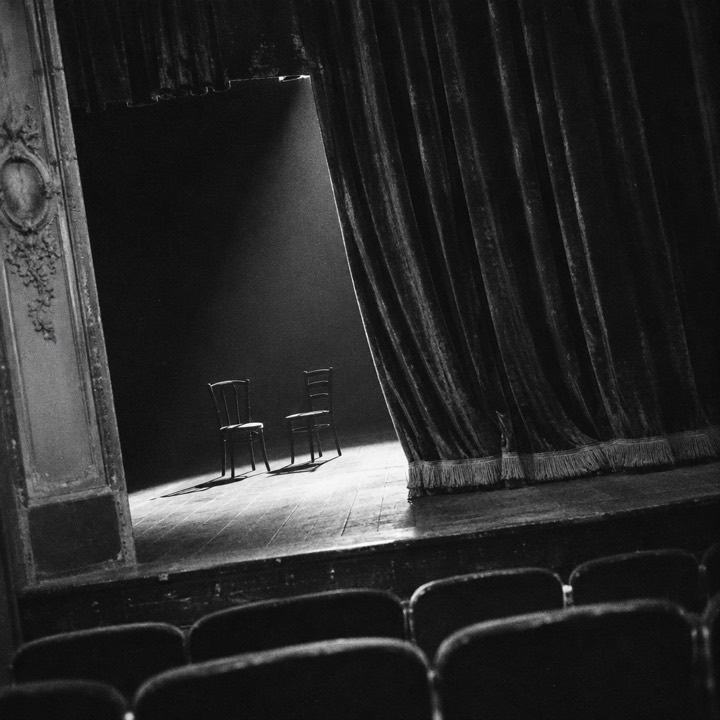
What theatre and stand-up have in common is that everything happens live and only once in exactly that way. Almost everything else sets them apart: how seats are sold, the rules in the audience and how to read the announcement.
How to read a theatre’s repertoire
A repertory theatre plays the same titles many times, sometimes over several seasons. So in the programme you will see the same play on several dates. The premiere is the first performance of a new production. The following evenings are regular performances, for which tickets are easier to get. If you like the title but the date does not suit you, check the theatre’s repertoire for later dates.
Alongside theatres with a permanent company there are receiving venues that host touring productions. Such a production comes to the city once or twice and returns only after a few months, or not at all. In our programme both kinds look the same, so it is worth glancing at the organiser’s website to find out whether there will be another chance.
What a play’s announcement tells you
A good announcement gives the running time, the number of intervals, the recommended age and the stage where the performance takes place. The running time decides when you get home, and the interval tells you whether you will have time to eat something. Theatres with several stages perform at different addresses, so check whether it is the main stage, the studio stage or a guest stage in another building.
Theatres put warnings about loud sounds, stage smoke, strobe lighting or scenes unsuitable for younger audiences in the description. If you are going with a teenager or are sensitive to such things, read the description to the end.
Choosing a seat
In a theatre, seats are numbered and priced differently. The front rows bring you close to the actors, but with a high stage you will be craning your neck. The middle of the auditorium gives the best view of the whole. The balcony is often cheaper and, in large productions, lets you see the layout of the stage from above. On small studio stages the differences are slight, because every seat is close.
Many theatres offer concessions for school pupils, students and older people, as well as cheaper last-minute tickets (wejściówki) sold just before the performance if there are seats left. Each theatre sets its own rules and lists them with its prices.
Rules worth knowing
You arrive at the theatre before the start. Once the performance has begun, staff often do not let latecomers into the auditorium, or let them in only at the interval, so as not to disturb the actors and the audience. Coats go to the cloakroom. Phones are silenced and put away, because a glowing screen can be seen from the whole house and from the stage.
Dress is relaxed these days. Apart from gala premieres, nobody expects evening wear. Clothes you feel comfortable sitting in for two hours are enough.
Stand-up: open mics, try-outs and solo shows
In the stand-up programme you will come across three kinds of evening. An open mic is an open stage: anywhere from a few to a dozen or more comedians perform, including beginners, each for a few minutes. The standard is uneven, tickets are cheap or entry is free, and the atmosphere is relaxed. Try-outs of new material are shows by experienced comedians testing fresh jokes before a tour. A solo show is a polished set by one comedian, usually lasting over an hour, performed in larger venues.
The announcement usually says plainly which kind it is. If you are going for the first time and want a safe bet, choose a solo show. If you like surprises, an open mic can be the most interesting.
What to bear in mind at a stand-up show
Stand-up often takes place in clubs and pubs where seats are unreserved. Whoever arrives first gets to pick a table. The front row means a better chance that the comedian will talk to you from the stage. If you do not like that, sit further back.
Most shows are for adults, and organisers mark this with an 18+ note. Recording is usually forbidden, because comedians perform the same material in city after city and do not want it to end up online before the tour is over. Talking at your table during a set is more disruptive than at a concert, because everything depends on words.
Improv and cabaret
We list improvised theatre and cabaret in the same category. Improvisers create scenes live from suggestions shouted out by the audience, so every evening is different and hard to judge from the announcement. Polish kabaret is a popular genre of its own: prepared sketches and songs, often in large halls with numbered seats. If you prefer to know what you will see, choose cabaret. If you value an element of risk, choose improv.